
01 Overview
ORLT links to a basket of physical assets. Exposure comes through the token's value.
Orelith (ORLT) is a security token that gives qualified investors diversified exposure to a curated basket of physical, in-ground and vaulted assets. The basket brings together four categories that the modern economy cannot do without: critical minerals, precious metals, uranium and gemstones. Instead of researching and holding a dozen separate commodities, an investor holds a single digital token whose value is linked to the whole basket.
This whitepaper explains what the token is, why these assets, how the basket is built, how it is held, how the offering works, how the token is listed and how each risk is safeguarded. It is written to be read from top to bottom, but each section stands alone, and the contents rail will take you straight to the part you need. Every market figure in these pages links to the primary publisher that produced it, so that you can read the original and judge for yourself.
Why a basket
No single commodity tells the whole story of the decade ahead. Copper and lithium follow electrification. Uranium follows the return of nuclear power. Gold follows the world's appetite for a store of value that no government issues. Silver and platinum-group metals follow industry and clean technology. Gemstones follow the long-standing human habit of storing wealth in something small, rare and portable. Each category has its own cycle, its own buyers and its own supply constraints, and a basket that spans all four gives the token a broader base than any single position could.
The basket is also curated. The categories and the weights between them are set deliberately, published in this document and reported on throughout the life of the token. Investors are not asked to trust a black box: they can see what the token is linked to, in what proportion and where it is held.
What an investor receives
An investor who takes part in the offering receives ORLT tokens at the fixed price of the stage in which they participate. The token is a digital record of the investor's position. Its value reflects the basket it is linked to, and the investor gains or loses through changes in that value. The token carries no other economic entitlement, a point that is set out in full in the section on token mechanics so that nobody is left in any doubt about the nature of the product.
Participation takes place through the Investor Account: register, complete identity verification, and follow the steps to buy. The Investor Account shows the current state of the offering, including the amount raised, the current stage and the time remaining. Every offering figure in the Investor Account and in this document is verified by the issuer before it is published.
How this document is organised
- Market thesis explains the demand drivers behind the four categories, with sources.
- Asset basket describes the four categories, the weights and a note on each of the twelve assets.
- Token mechanics sets out the nature of the token, its supply and its staged pricing.
- Token technology and listing explains the Ethereum smart contract, how tokens reach investors' wallets and how ORLT is listed.
- Custody and partners and Network and logistics describe how the assets are held and moved.
- Offering structure covers the four stages, the hard cap and listing price, the deadline and the refund protection.
- Governance and reporting sets out the issuer's commitments.
- Risks and safeguards, and Sources, close the document.
Orelith and ORLT are the names of the offering and its token. The issuer is PYRION GLOBAL METALS - FZCO, and the offering is governed by the laws of the United Arab Emirates.
02 Market thesis 2026–2027
The assets behind ORLT sit at the centre of four of the largest structural trends in the global economy.
The thesis behind Orelith is simple to state. Electrification, grid expansion, digital infrastructure and the revival of nuclear power all pull on the same short list of physical materials, while monetary uncertainty keeps pulling investors and central banks toward gold and silver. The supply of those materials is slow to respond: mines take many years to permit and build, processing capacity is concentrated in a few places, and the best deposits are not evenly spread around the world. That is a favourable backdrop for a basket of the underlying assets, and it is the reason the basket exists.
What follows is the evidence. Each figure is taken from a primary publisher and links to the page on which it appears.
A catalogue of the earth's resources, kept by governments
The United States Geological Survey publishes its Mineral Commodity Summaries every year. It is the earliest government publication to furnish estimates of non-fuel mineral industry data, and its data sheets cover more than 90 individual minerals and materials, including production, trade, prices and reserves. It is the reference point for most of the supply-side facts in this section, and it is the same reference the asset notes in the basket section link to for each element.
Electrification: the batteries and wires of the energy transition
The International Energy Agency's Global Critical Minerals Outlook 2025 gives the clearest single picture of what the energy transition asks of the mining industry. In the agency's Stated Policies Scenario, which reflects policies already in place rather than aspirations, lithium demand grows fivefold from today to 2040, while graphite and nickel demand double. The same outlook projects copper demand growing by 30% by 2040, with cobalt and rare earth demand rising 50 to 60% over the same period.
These are not marginal changes. A fivefold rise in lithium demand means building the equivalent of several new industries' worth of capacity within a single investment cycle. Copper, the workhorse of every grid upgrade, every electric motor and every charging network, faces the arithmetic of a mature mine base and a rising demand curve. Cobalt and rare earths, which are used in small quantities but in critical roles, face demand growth on top of a supply base that is highly concentrated.
Source: IEA Global Critical Minerals Outlook 2025
Concentrated supply: the case of cobalt
Demand is only half of the picture. The other half is where supply comes from. According to the USGS Mineral Commodity Summaries 2026 chapter on cobalt, Congo (Kinshasa) was the world's leading source of mined cobalt in 2025, accounting for an estimated 73% of the world total. When one country supplies nearly three quarters of a metal that batteries, jet engines and industrial magnets depend on, the physical market becomes sensitive to events far from the places where the metal is used. Holding a position that is linked to the physical metal, vaulted and documented, is a different proposition from holding a claim on any single producer.
Source: USGS Mineral Commodity Summaries 2026 · Cobalt
Digital infrastructure: data centres need copper and power
The IEA's Energy and AI report estimates that data centres consumed around 415 terawatt hours of electricity in 2024, roughly 1.5% of world electricity use, and projects consumption of around 945 terawatt hours by 2030 in its base case, a share just below 3% of world power use. Every one of those terawatt hours has to be generated, transmitted and delivered, and that means more cable, more transformers, more storage and more firm, low-carbon generation. Digital infrastructure has become a physical-materials story, and it adds a new layer of demand on top of the energy transition.
Source: IEA Energy and AI · Energy demand from AI
Nuclear power: the fuel cycle restarts
Round-the-clock, low-carbon electricity is exactly what grids with growing demand are looking for, and nuclear power delivers it. The World Nuclear Association reports that about 440 operable reactors need roughly 69,000 tonnes of uranium a year, and its reference scenario lifts requirements to just over 150,000 tonnes by 2040. Primary mine supply has to rise to meet that path, and uranium mines, like all mines, take years to bring online. The World Nuclear Association's uranium markets page sets out the full supply and demand picture.
Source: World Nuclear Association · Uranium markets
Gold: a store of value that central banks keep buying
The World Gold Council's Gold Demand Trends for the full year 2025 reports that total gold demand exceeded 5,000 tonnes in 2025 for the first time, and that central banks alone bought 863 tonnes. Official-sector buying is a distinctive feature of the market: central banks are long-horizon holders with no need to sell, and their continued purchases reflect a view that physical gold belongs in national reserves. For an investor, that is a reason to treat gold as a core part of the basket rather than a side position.
Source: World Gold Council · Gold Demand Trends, full year 2025
Silver: industrial demand against a thin supply response
Silver is both a precious metal and an industrial input, which gives it a double source of demand. The Silver Institute's Silver Institute · World Silver Survey 2026 press release reports that silver industrial demand was 657.4 million ounces in 2025 (a decline of about 3% on the year), and that global silver demand exceeded supply for the fifth consecutive year. Solar panels, electronics and grid equipment all use silver for the same reason: nothing conducts electricity better. As those industries expand over time, so does the call on a metal that is mostly mined as a by-product of other metals and therefore cannot easily be scaled up on its own.
Source: The Silver Institute · World Silver Survey 2026
Platinum-group metals and gemstones
Platinum and palladium are the catalyst metals of the automotive and chemical industries, and platinum is also a key material in hydrogen technology. The World Platinum Investment Council's Platinum Quarterly is the standard industry reference for the platinum market's supply and demand. Gemstones, finally, sit apart from the industrial story: their value rests on rarity, certification and the long human tradition of carrying wealth in a form that is small and portable. The Gemological Institute of America's Gem Encyclopedia documents the grading standards that make that certification possible.
From thesis to basket
Put the strands together and a pattern emerges. Critical minerals are driven by electrification and digital infrastructure. Uranium is driven by the demand for firm, low-carbon power. Precious metals are driven by monetary demand and by industry. Gemstones are driven by scarcity. The four drivers are different enough that they do not move together by design, and strong enough that each has a documented, sourced foundation. The Orelith basket is the simplest way we know to hold all four through a single token. Nothing in this section is a forecast of price or performance: it is a description of the demand that exists today and the supply that serves it.
03 Asset basket
The ORLT basket is made of four asset categories that represent durable, globally relevant geological resources.
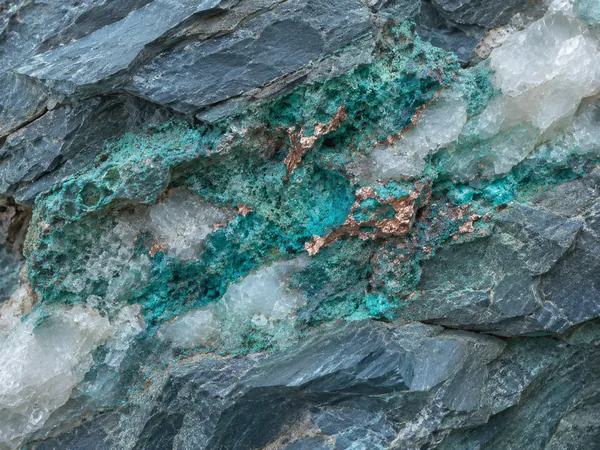
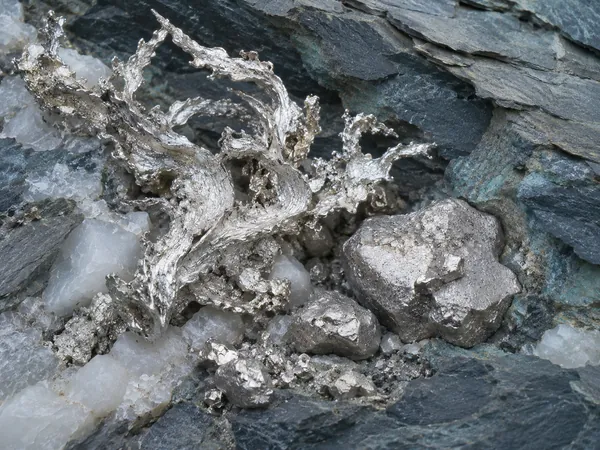
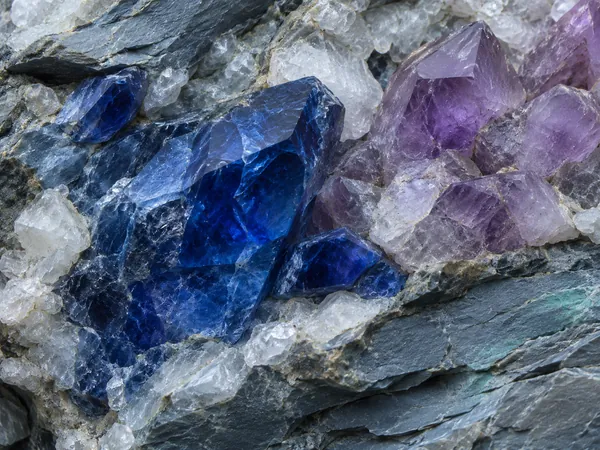
The mix is intended to give diversified, long-term value exposure. Each category was chosen because it answers a different question about the decade ahead: what will power it, what will move it, what will store value through it and what will remain scarce within it. The categories are described below, followed by the weights between them and a note on each of the twelve individual assets.
Primary reference for supply data: USGS Mineral Commodity Summaries
Basket weights
The weights below set how much of the basket each category represents. They are published so that investors know exactly what the token is linked to, and any change to the weights is a governance matter reported to holders, as described in the section on governance and reporting.
| Category | Weight | Includes |
|---|---|---|
| Critical minerals | 45% | Lithium, copper, nickel, cobalt, graphite and rare earths |
| Precious metals | 30% | Gold, silver, platinum and palladium |
| Uranium | 15% | Fuel for the world's expanding nuclear fleet |
| Gemstones | 10% | Certified rough and polished stones |
Critical minerals
Critical minerals carry the largest weight in the basket because they sit closest to the structural trends described in the market thesis. They are the materials of batteries, grids, motors and magnets, and the countries that import them have increasingly come to regard secure supply as a matter of national strategy. The category covers six assets, each with its own role.
Lithium
The lightest metal is the heart of the lithium-ion battery, which powers electric transport and the grid-scale storage that lets renewable generation run around the clock. The International Energy Agency's Stated Policies Scenario has lithium demand growing fivefold to 2040, the steepest rise among the major battery materials. Lithium is produced from hard-rock deposits and from brines, and bringing new capacity online takes years. USGS · Lithium
Copper
Copper is the metal of electrification. It carries current in every motor, every cable, every transformer and every charging point, and no commercial substitute matches its combination of conductivity, durability and cost. The IEA projects copper demand growing by 30% by 2040. New copper discoveries are rarer and more remote than they once were, which makes established copper districts and their logistics chains particularly valuable. USGS · Copper
Nickel
Nickel gives battery cathodes their energy density and gives stainless steel its resistance to corrosion. It therefore has two large markets, one traditional and one growing. The IEA's Stated Policies Scenario has nickel demand roughly doubling by 2040. Supply comes from a small number of producing regions, and the processing of nickel into battery-grade material is a specialised step that adds to its strategic weight. USGS · Nickel
Cobalt
Cobalt stabilises long-life battery chemistries and strengthens the superalloys inside jet engines. It is also the clearest example of supply concentration in the basket: the USGS estimates that Congo (Kinshasa) accounted for 73% of world mined cobalt in 2025. The IEA projects cobalt demand rising 50 to 60% by 2040. USGS · Cobalt
Graphite
Graphite is the anode material in nearly every lithium-ion battery cell, which means that for every tonne of lithium-ion capacity built, a matching quantity of graphite is needed. The IEA's Stated Policies Scenario has graphite demand doubling by 2040. Natural flake graphite is mined in a handful of countries, including the east African deposits that feature in the Orelith network. USGS · Graphite
Rare earths
Tiny quantities of rare earth elements make the strongest permanent magnets in the world, and those magnets sit inside wind turbine generators and electric vehicle motors. The IEA projects rare earth demand rising 50 to 60% by 2040. Mining is only the first step: separation and refining are specialised, capital-intensive processes, and that processing step is where the market is most concentrated. USGS · Rare earths
Precious metals
Precious metals provide the basket's store-of-value core and a second source of industrial demand. Gold and silver have been used as money for millennia, and the platinum-group metals are among the most useful catalysts ever discovered. This category balances the more cyclical industrial minerals with assets that investors and central banks hold for the long term.
Gold
Gold is the original store of value, held by central banks and investors worldwide. The World Gold Council reports that total gold demand exceeded 5,000 tonnes in 2025 for the first time and that central banks bought 863 tonnes. Gold is the most liquid and most widely recognised physical asset in the basket, and its refining and vaulting standards are the most mature, which makes it a natural anchor for the category. World Gold Council · Gold Demand Trends
Silver
Silver is the best electrical conductor of any metal and is essential in solar cells, electronics and grid equipment. The Silver Institute reports industrial demand of 657.4 million ounces in 2025, a decline of about 3% on the year, and a fifth consecutive year in which global demand exceeded supply. Silver therefore combines a monetary heritage with a substantial industrial role. USGS · Silver
Platinum
Platinum is a rare, dense white metal used in catalytic converters, chemical processing and hydrogen technology, where it is a key material in electrolysers and fuel cells. Most of the world's platinum is mined in a small number of districts, which makes supply sensitive to local conditions. The World Platinum Investment Council publishes the market's standard quarterly review of supply and demand. WPIC · Platinum Quarterly
Palladium
Palladium is the catalyst metal that cleans vehicle exhaust and drives a range of modern electronics. It is mined together with platinum and, in some districts, as a by-product of nickel, so its supply follows the fortunes of other metals as much as its own price. It is the fourth of the platinum-group and precious metals in the basket and completes the category's industrial side. USGS · Platinum-group metals
Uranium
Uranium is the fuel behind round-the-clock, low-carbon nuclear power. The World Nuclear Association reports that about 440 operable reactors need roughly 69,000 tonnes of uranium a year and that its reference scenario lifts requirements to just over 150,000 tonnes by 2040. Uranium has its own market, its own logistics and its own regulatory regime, which is why it is held as a separate category rather than folded into the others. World Nuclear Association · Uranium markets
Gemstones
Gemstones add rarity to the basket. Certified rough and polished stones carry value that travels across borders and generations, and the basket is limited to stones that have been graded by an independent laboratory so that each can be identified and verified. Gemstone valuation differs from commodity valuation: price depends on grading, provenance and individual characteristics rather than on a quoted spot market, which is why the category carries the smallest weight. GIA · Gem Encyclopedia
How the basket is managed
The basket is not a trading book. It is built and held with a long horizon, and the issuer's role is to acquire, document and safeguard the assets rather than to speculate on short-term price moves. Weights are set when the basket is formed and reviewed on a published schedule. Where an asset has to be replaced, for example because a particular lot cannot be sourced to the required standard, the replacement is chosen from the same category so that the category weights remain as published, and the change is reported to holders.
04 Token mechanics
ORLT is a value-exposure token. Holders gain or lose through the token's value.
This section describes exactly what ORLT is and what it is not. It is the most important section of the document for anyone considering taking part, and it should be read together with the Terms & Conditions and the section on risks and safeguards.
Value exposure only
ORLT carries no rights to payouts, dividends or distributions of any kind. It does not pay interest, it does not entitle the holder to a share of any income or profit of the issuer, and it does not give the holder any claim to receive periodic cash or other amounts. The sole economic characteristic of the token is its value: a holder gains if the value of the token rises and loses if it falls. There is no other source of return.
This design is deliberate. A token that is linked to physical assets and held for value exposure is simple to understand, simple to account for and simple to describe to a regulator. Investors know from the outset that what they hold is a position in value, and they are never required to assess a stream of payments, a payout policy or a dividend history, because none exists.
How the token's value relates to the basket
The token is linked to the basket described in the previous section. The intention is that the value of a ORLT token reflects the value of the basket of assets that stand behind it, so that as the market value of the basket's components changes, the value of the token follows. That is an intention and a design objective, not a guarantee. The market price at which ORLT can be traded or redeemed may be above or below the underlying value of the basket at any time, depending on liquidity, demand and the rules of any venue on which it is traded, and nothing in this document promises that the token will track the basket at all times or to any degree. The risks section discusses this in more detail.
Nothing in this document is a statement of expected performance. The issuer does not forecast the price of ORLT, does not compare it with any other investment and does not represent that holders will receive any particular outcome.
What backs the token
The assets in the basket are held by the issuer through accredited custody and vaulting arrangements, described in the next sections, with chain-of-custody documentation running from source to vault. The token is a digital record of an investor's exposure to those assets, issued on Ethereum and reflected in the investor's Investor Account. The record is held against the identity-verified account of the investor, which is why identity verification is a condition of participation.
Supply
Total supply, issuance and any allocations of ORLT are set by PYRION GLOBAL METALS - FZCO and disclosed in the offering documents. Investors acquire ORLT through the offering, at the stage prices set out below. Because the offering has a hard cap expressed in US dollars and each stage has a fixed price, the number of tokens sold through the offering is bounded by its own structure. In each stage, tokens are sold up to the amount that stage covers, divided by that stage's price. Once the hard cap is reached, the offering is complete; in specific arrangements the issuer can still offer tokens after that point, at the Hard Cap stage price. If the offering closes before the hard cap is reached, fewer tokens are sold, and the refund protection described in the offering structure applies.
The current offering figures, verified by the issuer, are shown below.
- Hard cap
- $450M
- Raised
- $13.7M
- Of hard cap
- 3%
- Closes
- 25 January 2027 at 11:20 UTC
Staged pricing
The offering is divided into four stages: Private Sale, Pre Sale, Soft Cap and Hard Cap. Each stage has a fixed token price, and the price steps up as the offering fills: a stage begins when the amount raised reaches its threshold, and the price in force is the price of the latest stage whose threshold has been reached. The Hard Cap is the fourth and final stage: the progress bar ends at its threshold, and its price is the listing price of the token. Tokens offered after the hard cap is reached, in specific arrangements, are sold at the Hard Cap price. Investors who take part early therefore buy at a lower price than those who take part later, and the price within a stage does not move. The table below shows every stage, with the current stage marked. Its figures are verified by the issuer.
| Stage | From (USD) | Price per ORLT | State |
|---|---|---|---|
| Private Sale | $0 | $0.01 | Current stage |
| Pre Sale | $230M | $0.03 | Upcoming |
| Soft Cap | $350M | $0.07 | Upcoming |
| Hard Cap | $450M | $0.10 | Listing price |
The amount raised, which determines the current stage, is published only after the issuer has checked the underlying payments and confirmed every commitment behind it. The offering structure section explains how this verification works.
Transfers, listing and liquidity
During the offering, purchased tokens are recorded in the investor's Investor Account. When the hard cap is reached, the offering completes and ORLT is listed on public cryptocurrency exchanges. This opens the token to a broad market of buyers and adds liquidity. From that point, holders can sell their tokens whenever they choose and realise their gains. The buyer takes over the holder's exposure to the basket, while the basket itself stays in the vaults, untouched by the trade. Holders who prefer to stay invested simply keep their tokens. The section on token technology and listing describes how the token reaches the exchanges. The transfer rules that apply before listing are set out in Article VII of the Terms & Conditions.
05 Token technology and listing
ORLT is an Ethereum token, governed by an audited smart contract and listed on public exchanges once the hard cap is reached.
An Ethereum token
ORLT will be issued on the Ethereum mainnet as an ERC-20 token, the standard used by the great majority of digital assets. Ethereum is the largest smart-contract network in the world. It is secured by a broad, decentralised set of validators and has run continuously for years. Because ORLT follows the ERC-20 standard, it will work from day one with every major wallet, custodian and exchange.
The smart contract
The smart contract that governs ORLT is deployed once the hard cap is reached. Its source code is published and verified on Etherscan, so anyone can read the rules it enforces.
- The maximum supply of ORLT is set when the hard cap is reached, based on the tokens allocated in the offering. From then on it is fixed in the code, and no tokens can be created beyond it.
- The contract is built on OpenZeppelin's widely used, audited code library and is independently audited before the tokens are issued.
Control and security
The contract's administrative functions are held by a multi-signature wallet that needs five authorised signers to approve any action. The signing keys are kept in hardware security modules. No single person can move tokens or change the contract. Compliance controls, such as pausing transfers or freezing a specific address, can be used only where the law or a court order requires it, as described in the Terms & Conditions. Every use is visible on the blockchain.
Transparency on chain
Every ORLT transfer is recorded on the public Ethereum blockchain. Any holder can confirm their balance, and anyone can check the total supply, at any time on any block explorer, without relying on the issuer.
From purchase to wallet
During the offering, allocations are recorded in the Investor Account. When the offering completes, the tokens are issued and delivered to the Ethereum wallet each investor registered in their Investor Account.
The listing process
- The hard cap is reached and the offering completes.
- The tokens are delivered to investors' wallets.
- ORLT is listed on public cryptocurrency exchanges at the Hard Cap stage price. Every token, whenever it was bought, starts trading at that price. Investors who took part in an earlier stage paid less, so their tokens are already worth more than they paid on the first day of trading.
- The issuer provides initial liquidity on the exchanges, working with an appointed market maker, so buyers and sellers can meet from the first day of trading.
- The project continues after listing, with holder reports, custody attestations, exchange relationships and further listings where possible.
06 Custody, vaulting and partners
Physical assets will be held with accredited operators in insured, bonded vaults across three jurisdictions.
A token linked to physical assets is only as credible as the custody behind it. Orelith's approach will be to rely on established, independently accredited operators for every physical step, to document the assets at every handover and to insure them while they are held. The issuer's role will be to select, contract, monitor and report. It will not mine, refine or vault anything itself.
The partner network
The operating network will be built from three kinds of partner:
- Tier-1 mining operators across Africa and South America that are to produce the materials at source.
- Accredited refiners with chain-of-custody certification that are to turn ore and concentrate into material of a recognised standard.
- Insured, bonded vaulting in 3 jurisdictions that are to hold the finished assets.
Partners are described here by category and not by name. The specific counterparties will be disclosed to investors and regulators under the arrangements set out in the offering documents of PYRION GLOBAL METALS - FZCO, and named in the periodic reports described in the governance section. Selection criteria will be the same for every category: independent accreditation, a verifiable operating record, adequate financial standing, insurance and a willingness to be audited.
Chain of custody
Chain of custody is the documented, unbroken record of who held an asset, where and when, from the mine to the vault. Each step in the Orelith network is to produce records that are reconciled against the one before: the mine's output documentation, the transport manifest, the refinery's assay and certificate, the vault's receipt and the periodic stock count. A discrepancy at any step is investigated before the asset is accepted into the basket. For metals the records follow the standards of the refining and vaulting industries, and for gemstones they follow the independent grading that identifies each stone.
Insured, bonded vaulting
Vaulting will be carried out by operators that are bonded, meaning that the assets will be held under customs and regulatory supervision, and insured against loss, theft and damage while in storage. Assets will be held in the vaults of three jurisdictions rather than one, so that the basket is not exposed to a single national legal system, a single facility or a single point of operational failure. Vaults will be subject to audit, and their holdings will be reconciled to the issuer's records.
Segregation
Assets belonging to the basket will be recorded separately from the issuer's own property and from the assets of any other client of the vaulting operator. The purpose of segregation is to make sure that the basket remains identifiable and available to support the token even if a service provider were to face difficulty.
Verification and attestation
The issuer commits to periodic custody attestations: statements from the vaulting operators, and where applicable independent verifiers, confirming what is held. The reporting cadence and content are described in the governance section. Investors can follow the process from the data in their Investor Account, and the same information is available to regulators on request.
07 Network and logistics
From seam to refinery to vault: a short, documented route for every reserve.
The planned Orelith network is a deliberately compact arrangement of reserves, refineries, vaults, ports and an operations office, to be put in place as the basket is acquired after the offering completes. Its geography follows the geology: the largest concentration of reserves is in Africa, where the copper-cobalt belt, the Copperbelt, the Bushveld platinum-group deposits, the uranium of the Namib and the graphite of the east are found, with one lithium reserve in South America. There are no sites in Europe. The network map on the landing page shows every site and route.
Seam, refinery, vault
Every reserve is planned to be connected to one refinery and one vault by a defined route. Material will leave the mine as ore or concentrate, travels by road, rail or ship to an accredited refinery, is processed into material of a recognised standard and then moves to a bonded vault. Keeping the route short and fixed has three advantages: it limits the number of handovers at which material can be lost or mixed, it makes the paper trail easy to audit, and it allows the issuer to concentrate its monitoring effort on a small set of known facilities.
Site types
- Reserves are the target sources: six sites in all, five in Africa and one in South America. They cover copper and cobalt in the Congolese belt, copper on the Zambian Copperbelt, uranium in Namibia's Erongo region, platinum-group metals in South Africa's Bushveld Complex, flake graphite in Tanzania and lithium brines in Chile's Atacama.
- Refineries are the planned accredited processing sites; the planned network includes certified refining near Rustenburg in South Africa and in Dubai.
- Vaults are the planned bonded storage sites, with Johannesburg, Dubai and Singapore as the target locations. These are the three vaulting jurisdictions referred to throughout this document.
- Logistics hubs are the deep-water ports at Walvis Bay, Durban and Dar es Salaam through which material is planned to move.
- The operations office is planned for Dubai, to coordinate custody and logistics across the network.
The regions
The network is Africa-weighted by design. Africa is where much of the world's copper, cobalt, platinum-group metals, uranium and graphite is mined, and it is where the issuer's route from seam to vault is shortest. The Middle East provides refining capacity, an operations office and a major vaulting centre with deep logistics links to both Africa and Asia. Singapore adds a third, independent vaulting jurisdiction in Asia. South America contributes lithium. The result is a network that follows the geology and the trade routes rather than geography for its own sake.
Site locations and descriptions on the landing map are generic, approximate and indicative of the planned network, and the specific facilities will be disclosed as described in the section on custody and partners.
Moving material
Logistics will be carried out by contracted carriers under documented procedures and insured against loss in transit. Shipments will be sealed, tracked and reconciled on arrival, and any discrepancy will be recorded and investigated before material is accepted. The deep-water ports in the planned network would give the issuer a choice of routes and reduce its exposure to disruption at any single port.
What logistics means for investors
Investors do not handle any physical material. The network exists so that the assets behind the token are real, documented and secure, and so that the basket can be verified at each step. The issuer's logistics commitments are reported alongside the custody attestations, as set out in the governance section.
08 Offering structure
Four stages, a fixed price in each, one hard cap and a deadline, with refund protection if the cap is not reached.
The offering is the only way ORLT is issued. Its structure is intended to reward early participation, to be transparent about how much has been raised and to protect investors if the offering does not complete.
Four stages and a hard cap
The offering runs in four stages. Each stage has a fixed token price, and the price steps up as the offering fills. The Hard Cap is the fourth and final stage: the progress bar ends at it, and its price is the listing price of the token. Early stages carry a lower token price, and the hard cap bounds the size of the offering.
The current figures, verified by the issuer, are:
- Hard cap
- $450M
- Raised
- $13.7M
- Of hard cap
- 3%
- Closes
- 25 January 2027 at 11:20 UTC
The deadline
The offering has a closing time, expressed in UTC, shown in the summary above and counted down in the Investor Account and on the landing page. When the closing time passes, the offering is closed and no further participation is possible, whether or not the hard cap has been reached.
How progress is verified
The amount raised is published by the issuer in the Investor Account. The same figure drives the progress bar and the silo on the landing page, the stage in force and the figures in this document, so all of them always agree. Every update is made by hand, and only after the issuer has checked the records and confirmed every commitment behind it. This ensures that each published figure is backed by confirmed payments and that no tampering can take place.
How to take part
- Register in the Investor Account.
- Verify your identity by completing the identity verification (KYC) steps.
- Choose Buy ORLT and follow the steps to place your order at the price of the current stage.
Eligible investors in the United Arab Emirates and other permitted jurisdictions can take part after identity verification. Availability depends on local rules and is confirmed during registration.
Refund protection: 90% back, 10% for costs
If the offering does not reach its hard cap, 90% of your invested capital is returned from escrow, pro rata to your contribution, and 10% covers legitimate costs already incurred. Funds are held in escrow until the offering completes, so that the return does not depend on the issuer's own resources.
What happens when the offering completes
When the offering completes, the funds raised are applied to acquiring, documenting and vaulting the basket in the proportions published in this document, and the tokens are issued to the investors' accounts. The first custody attestation and the first report to holders follow on the timetable described in the next section.
09 Governance and reporting
Clear responsibilities, a fixed reporting cadence and commitments an investor can hold the issuer to.
Good governance is what turns a basket of assets into an investable product. This section describes the issuer's commitments. They are commitments of the issuer, set out here so that investors know what they can expect and so that regulators can see how the product is run.
The issuer
The token is issued by PYRION GLOBAL METALS - FZCO (LEI 9845003BF4FYDQN1E708), a free zone company established in the United Arab Emirates, registered at IBP-S20-94230, Dubai Silicon Oasis, Dubai, United Arab Emirates. The issuer is responsible for the offering, for the formation and maintenance of the basket, for the appointment and oversight of custody, vaulting and logistics providers, for the investor platform and for reporting to holders. Its identity, registration details and officers are set out in the offering documents of PYRION GLOBAL METALS - FZCO and are available to investors during registration.
Applicable law
The offering and the token are governed by the laws of the United Arab Emirates, and the offering is made only in jurisdictions where it is permitted. The issuer commits to comply with the securities, anti-money-laundering and sanctions rules that apply to it, to carry out identity verification on every investor before participation and to cooperate with the competent authorities.
Basket governance
The category weights in the basket are those published in this document. The issuer commits that:
- the basket will be formed in the published proportions when the offering completes;
- any change to the category weights will be reported to holders, with reasons, before it takes effect;
- an asset that has to be replaced will be replaced from the same category, and the replacement will be reported;
- the issuer will not take speculative positions in the basket's assets.
Custody attestations
The issuer commits to obtain a custody attestation from each vaulting operator at least quarterly, confirming the assets held on behalf of the basket, and to obtain an independent verification of the holdings at least annually. A summary of each attestation is made available to holders in the Investor Account.
Reporting cadence
| Report | Frequency | Content |
|---|---|---|
| Offering progress | Continuous | Amount raised, stage in force, time remaining |
| Custody attestation | Quarterly | Holdings confirmed by each vaulting operator |
| Holder report | Quarterly | Basket composition, weights, material events |
| Independent verification | Annual | Third-party confirmation of holdings and records |
| Annual report | Annual | Financial statements of the issuer and review of the year |
Conflicts of interest
The issuer commits to maintain a written policy for identifying and managing conflicts of interest, including those that could arise between the issuer, its affiliates and the providers it appoints, and to disclose material conflicts to holders. Providers are selected on the criteria described in the custody section, and their appointments are reviewed periodically.
Investor communication and complaints
Investors receive notices and reports through the Investor Account. The issuer commits to answer enquiries promptly, to operate a documented complaints procedure and to tell investors how to escalate a complaint that has not been resolved. Material events, such as a change of custodian or a significant incident at a facility, are reported to holders without waiting for the next scheduled report.
Information security and records
Investor data is processed in line with the Privacy & Data Protection provisions of the Terms & Conditions. Records of the offering, of custody and of reporting are retained for the periods required by the applicable rules, and are available to regulators on request.
10 Risks and safeguards
Every material risk was identified in advance, and a safeguard is in place for each.
Like any investment, ORLT carries risks, including commodity price movements, geological and technical uncertainty, regulatory change and the possibility of losing capital. Orelith was designed around them. For each risk below, the issuer put a specific safeguard in place before the first token was sold. The list covers the main risks. Read it together with the Terms & Conditions, and seek independent professional advice if you wish.
- Commodity price. Commodity prices move with global growth, interest rates, currencies and sentiment, and the token's value follows the basket. Safeguard. The basket spans four categories with different demand drivers (electrification, nuclear power, monetary demand and scarcity). They do not move together by design, so the others can cushion weakness in one.
- Geological. No deposit's size and grade are ever known with complete certainty. Safeguard. The basket holds refined, assayed and vaulted material rather than a stake in any single deposit, and it is sourced from established districts with long production records.
- Operational. Mining, refining, transport and vaulting are exposed to accidents, equipment failure, weather and human error. Safeguard. Only accredited partners working under documented procedures, insurance at every stage including in transit, and short, fixed routes that keep handovers to a minimum.
- Custody. Assets held by third parties could be lost, damaged or become inaccessible. Safeguard. Insured, bonded vaults in three jurisdictions, segregation from the issuer's own property and from other clients' assets, quarterly attestations and an annual independent verification.
- Counterparty. A provider could fail to perform or become insolvent. Safeguard. Providers are chosen for accreditation, track record, financial standing, insurance and willingness to be audited, and are reviewed regularly. The network uses three vault jurisdictions and several ports, so no single provider is indispensable.
- Regulatory. Rules for securities, mining and digital assets differ between countries and change over time. Safeguard. The offering is made only where it is permitted, every investor is identity-verified, and the issuer monitors changes with its legal advisers and cooperates with the authorities.
- Liquidity. Before listing, tokens are held in the Investor Account, and after listing trading volumes vary from day to day. Safeguard. ORLT is listed on public exchanges once the hard cap is reached, and the issuer provides initial liquidity together with an appointed market maker.
- Technology. Software, networks and digital security can fail or be attacked. Safeguard. An independently audited smart contract on Ethereum, multi-signature control of every administrative function, an encrypted investor platform, and a public on-chain record anyone can verify.
- Concentration. The basket is focused on physical resources from a limited number of regions. Safeguard. Twelve assets across four categories, reserves spread over six sites on two continents, and vaults in three separate jurisdictions.
- Loss of capital. The token's value can fall as well as rise, and it pays no dividends. Safeguard. Refund protection if the hard cap is not reached (90% back), a diversified basket, and long-horizon management with no speculative positions.
- Tracking. The market price of the token can differ from the value of the basket. Safeguard. Published weights, quarterly holder reports and custody attestations give the market everything it needs to price the token against the basket.
- Valuation. Some assets, especially gemstones, have no continuously quoted price. Safeguard. Only stones graded by an independent laboratory are admitted, and gemstones carry the smallest weight in the basket.
- Political and sanctions. Producing countries can face political change or sanctions. Safeguard. Every counterparty is screened against sanctions lists, several ports and routes are available, and the vaults sit outside the producing countries.
- Offering and refund. If the hard cap is not reached, the refund is 90% of your invested capital. Safeguard. Funds are held in escrow, independent of the issuer's own resources, until the outcome is known.
- Environmental and social. Mining carries environmental and social responsibilities, and the rules are tightening. Safeguard. Partners must hold recognised certifications, and environmental and social standards are part of every partner audit.
No investment is free of risk. What investors can count on is that each of these risks was considered before the offering opened, and that it is monitored and reported on throughout the life of the token. Choose an amount that suits your own circumstances.
11 Sources
Every market figure in this document comes from a primary publisher. Each link below was opened and read when this document was prepared.
- USGS · Mineral Commodity Summaries. An annual government publication covering more than 90 individual minerals and materials.
- USGS · Mineral Commodity Summaries 2026, Cobalt. Congo (Kinshasa) accounted for an estimated 73% of world mined cobalt in 2025.
- IEA · Global Critical Minerals Outlook 2025. Lithium demand fivefold, graphite and nickel doubling, copper up 30%, cobalt and rare earths up 50 to 60% by 2040 in the Stated Policies Scenario.
- IEA · Energy and AI, energy demand from AI. Data centres consumed around 415 terawatt hours in 2024, with around 945 terawatt hours projected by 2030.
- World Nuclear Association · Uranium markets. About 440 operable reactors, roughly 69,000 tonnes of uranium a year, just over 150,000 tonnes by 2040 in the reference scenario.
- World Gold Council · Gold Demand Trends, full year 2025. Demand above 5,000 tonnes and central bank purchases of 863 tonnes.
- The Silver Institute · World Silver Survey 2026. Industrial demand of 657.4 million ounces and a fifth consecutive year of demand above supply.
- World Platinum Investment Council · Platinum Quarterly. The industry reference for platinum supply and demand.
- Gemological Institute of America · Gem Encyclopedia. Grading standards for gemstones.
- USGS National Minerals Information Center commodity pages: lithium, copper, nickel, cobalt, graphite, rare earths, silver and platinum-group metals.
Orelith and ORLT are working names. All figures describing the offering are verified by the issuer.